
Cars
Posted: May 6, 2015 Filed under: USkO | Tags: cars, pencil, watercolor Leave a commentI have always found that old cars have more character than what leaves the factories today. Over the past three days I went around the neighborhood to sketch a few I have noticed on my commute. It took me a little while to get the proportions right – I always struggle with perspective when my sketch subject has essentially no straight lines. Wanting to take a break from my standard pen sketches, I also had to re-familiarize myself with pencil. After about three hours of sketching these were my results.
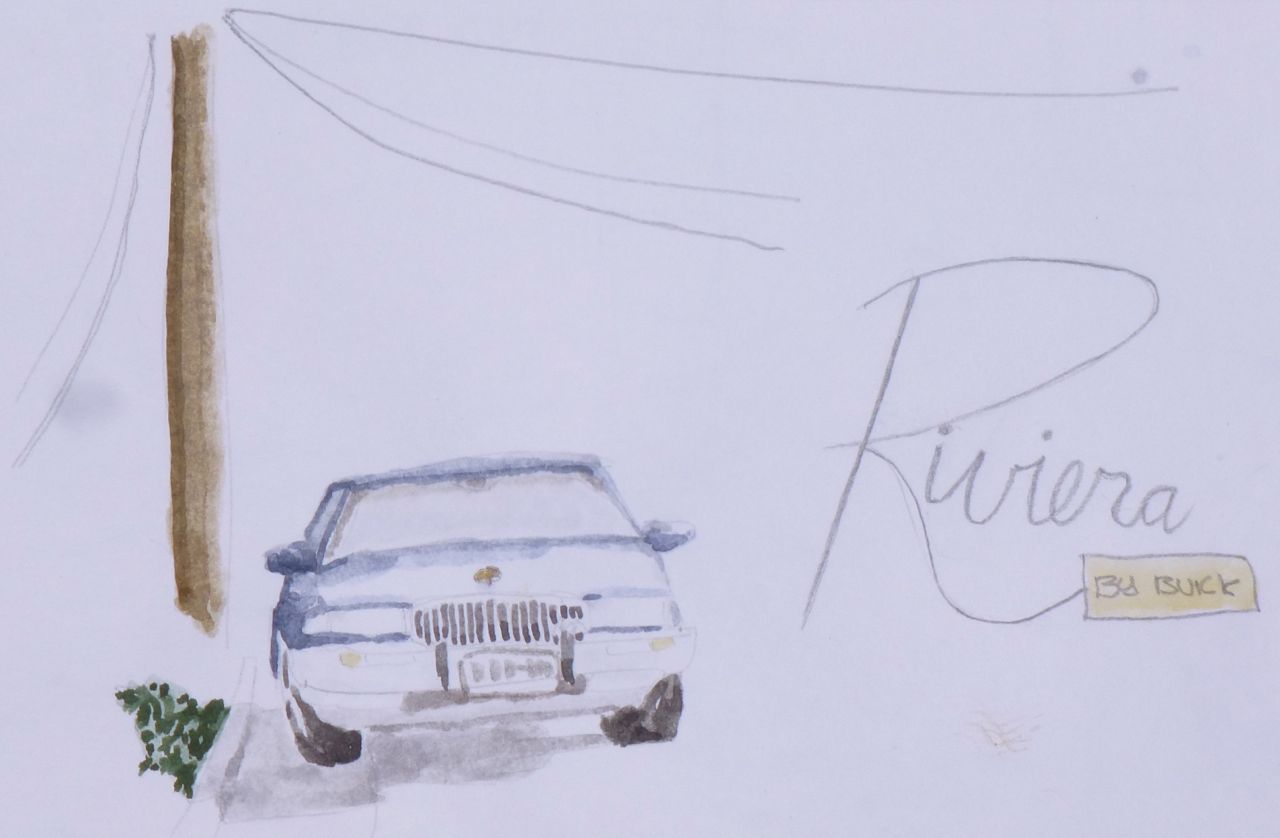
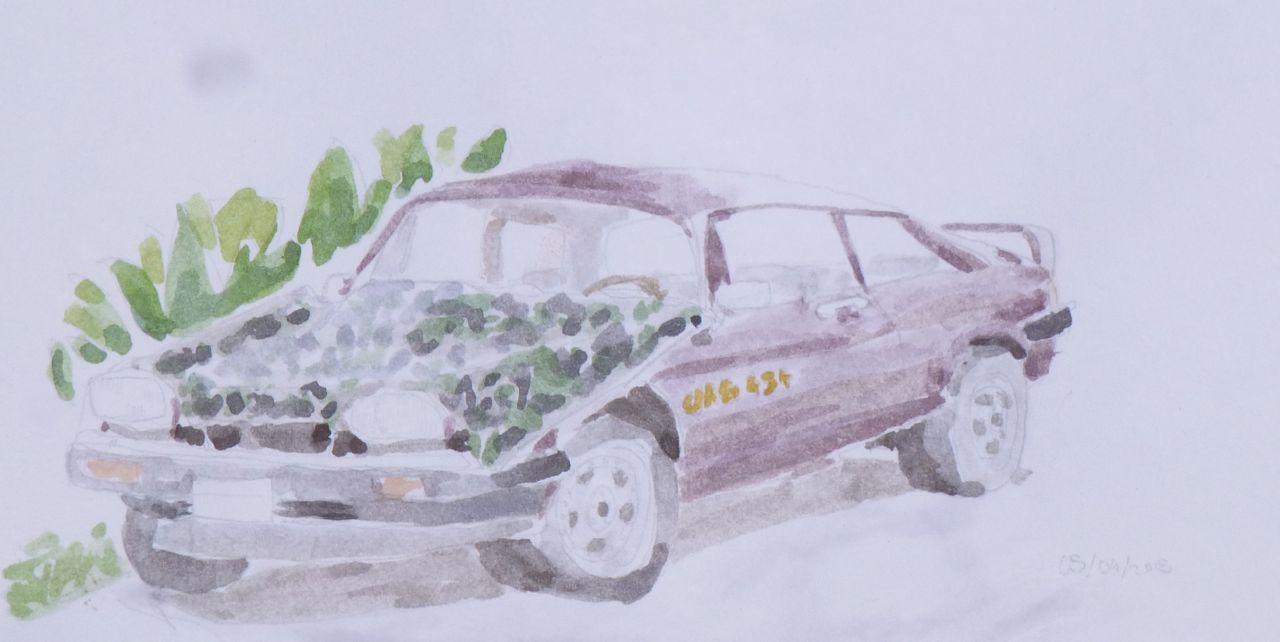
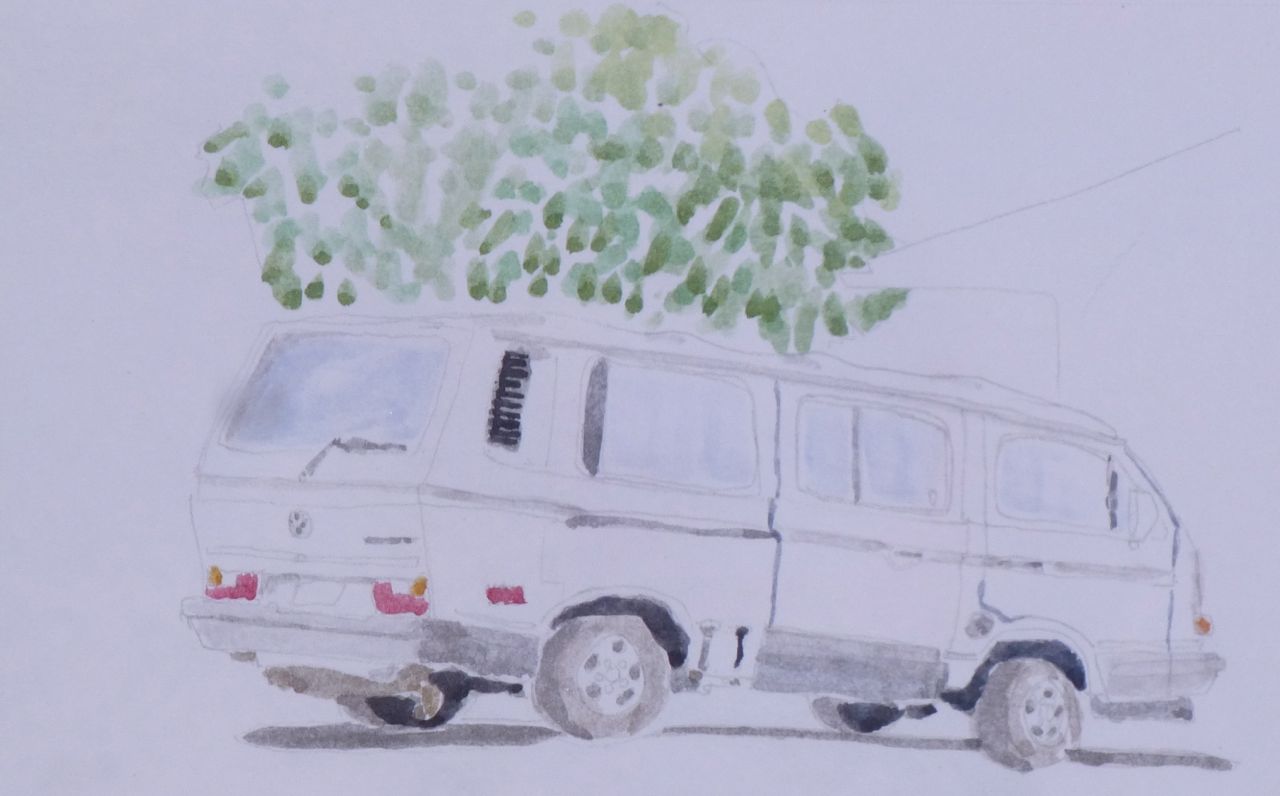
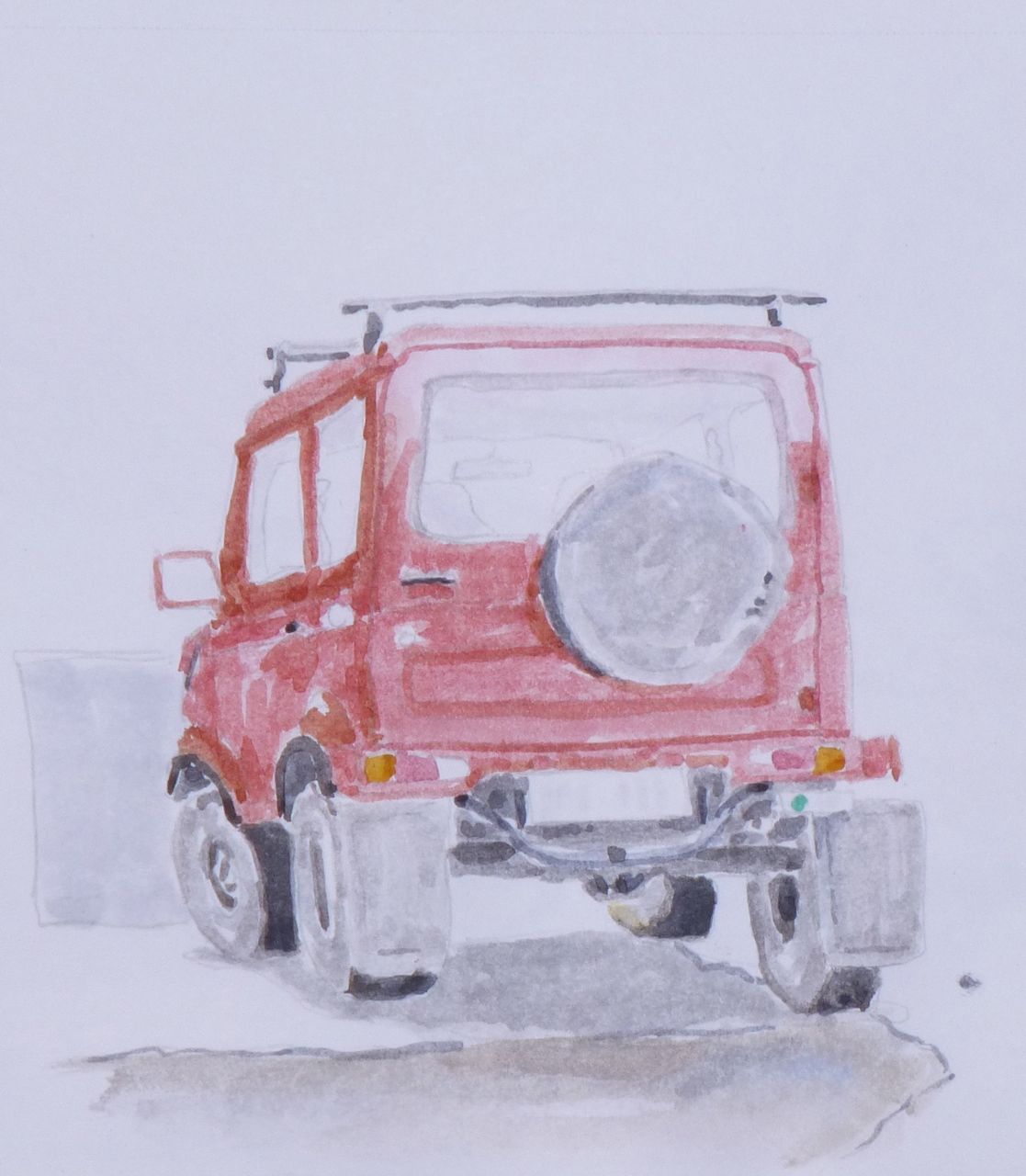
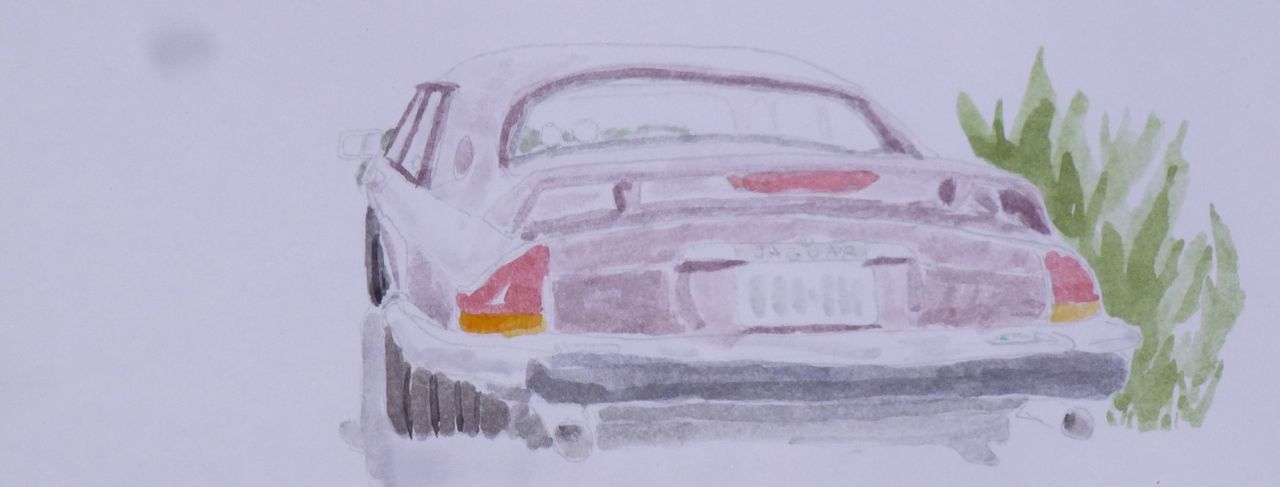
Following a little online investigation my guesses as to what I sketched are a 1980s Buick Riviera, 1990s Jaguar XJR-S coupe, 1990s VW Vanagon, and possibly a 1990s Suzuki Jimny.
Of course, just when I was finishing, a truly old car passed me – a beautifully kept 1960s Mercedes convertible. Got to track that one down…
AIA Architecture Walking Tour
Posted: April 28, 2015 Filed under: USkO | Tags: AIA, Aloha Tower, architecture, colored pencil, pen, pencil, watercolor 2 CommentsLast Saturday we (AJ, Harald, and I) attended the American Institute of Architect’s (AIA) Architecture Walking Tour “Downtown Honolulu – 20th Century Architectural Styles”. Although AIA regularly offers tours throughout the year this one was only offered once in 2015 as part of Architecture Month.
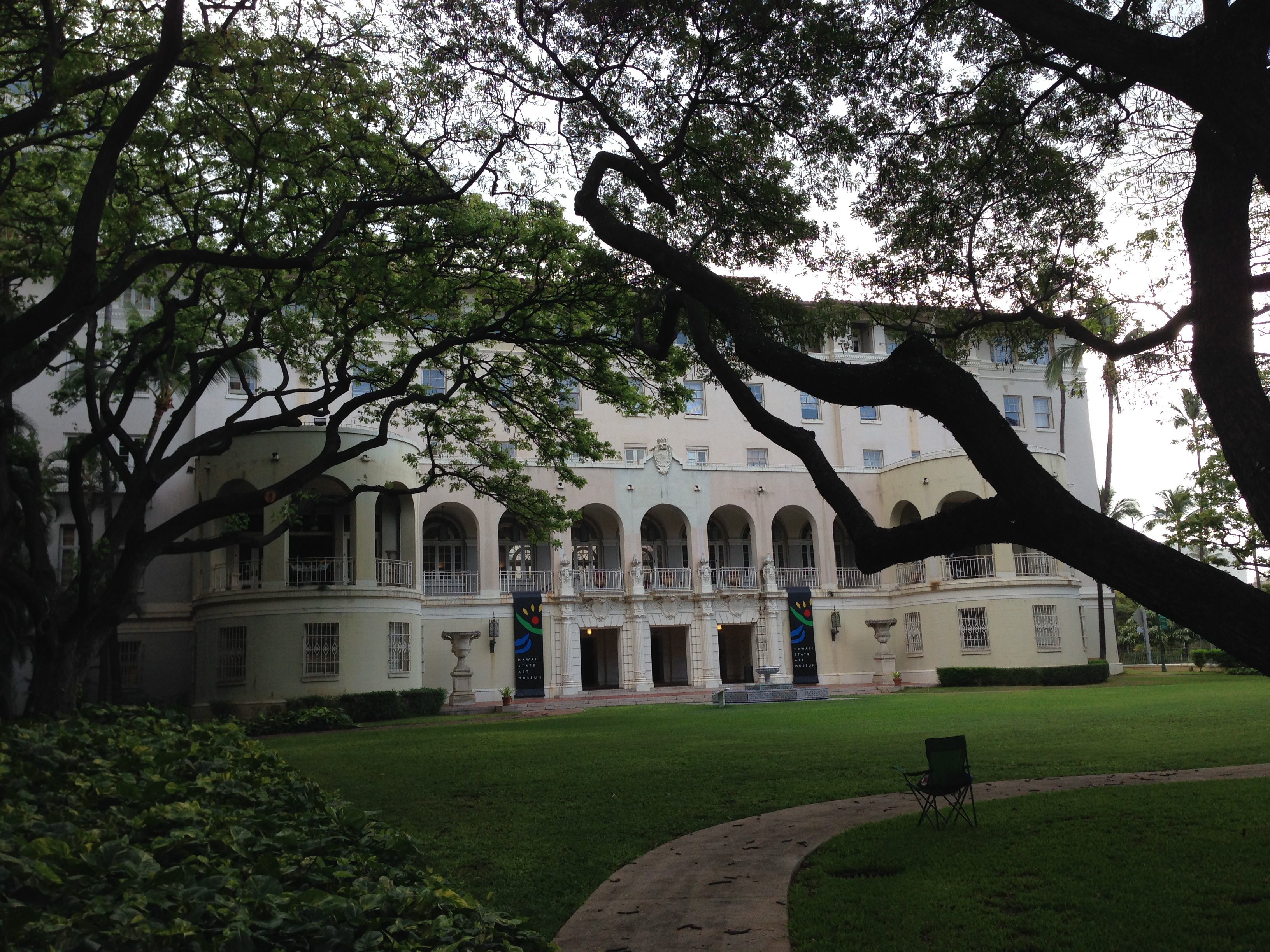
For two hours I learned about the history and styles of buildings in the business district – a place I have spent little time in and have not cared for much before. By the end of the tour I no longer saw downtown as just a jumble of high-rises. Each building has its own story. For example, the No.1 Capitol District Building was originally the site of the first Royal Hawaiian Hotel commissioned under King Kamehameha V and opened in 1872 to host foreign dignitaries and friends of the royal family. The hotel was then converted to a YMCA in 1917 and used by the military in World War I and II. In 1926, while in military use, the hotel was demolished and a Spanish mission revival style building was erected which has housed the Hawaii State Art Museum since 2000. An art museum in Honolulu that I was aware of, but had not been to. Will have to pay it a visit soon… It is located on the aptly-named South Hotel Street.
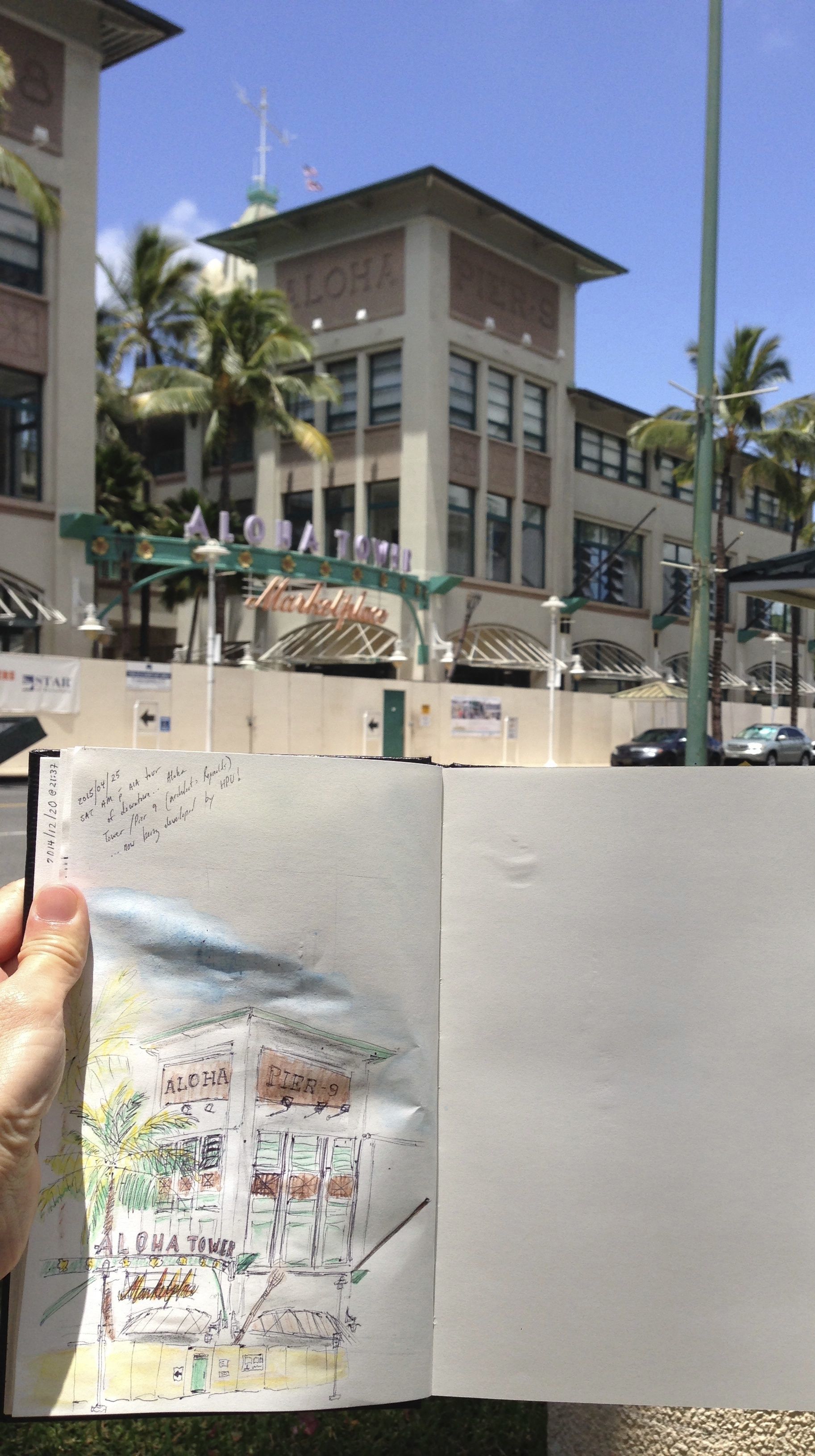
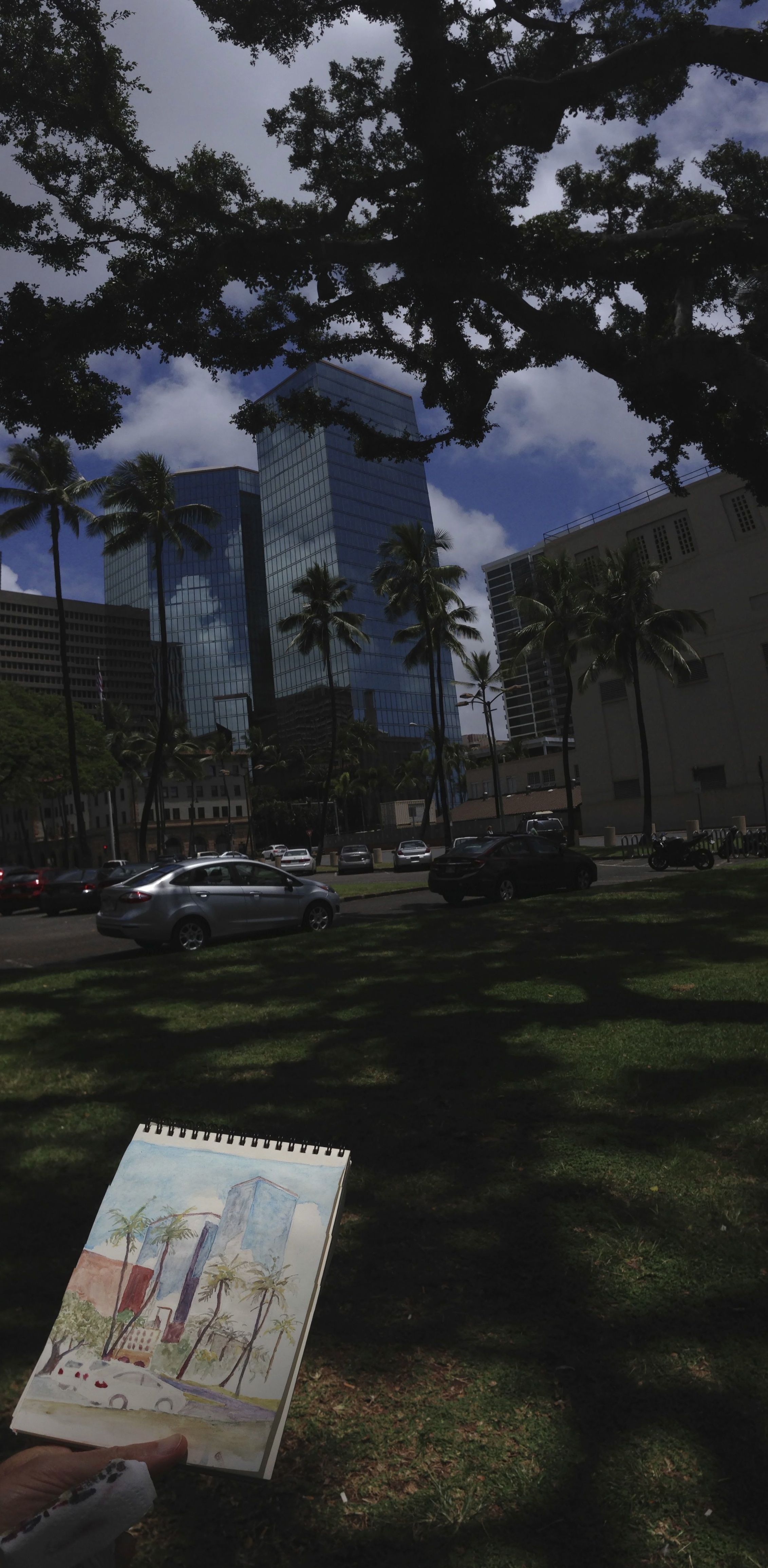
The final historically significant structure we visited was the Aloha Tower. Built in 1926 it originally served as a lighthouse but was decommissioned in the late 1960s and is now being revitalized by Hawaii Pacific University. The view from the observation deck is outstanding. In order not to be in the way (and view) of other visitors to the deck, we decided to sketch the tower and its surroundings from the marketplace.
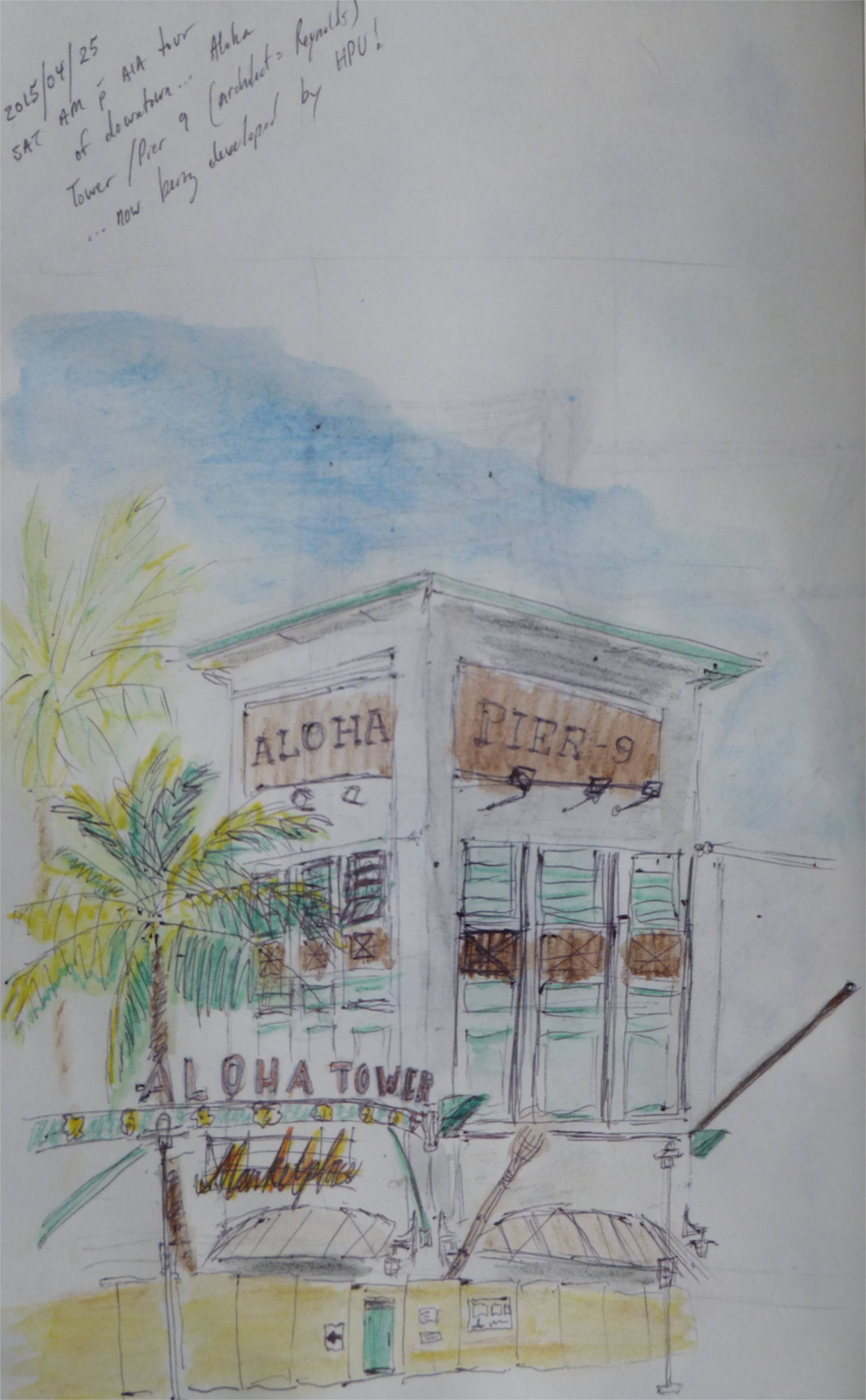
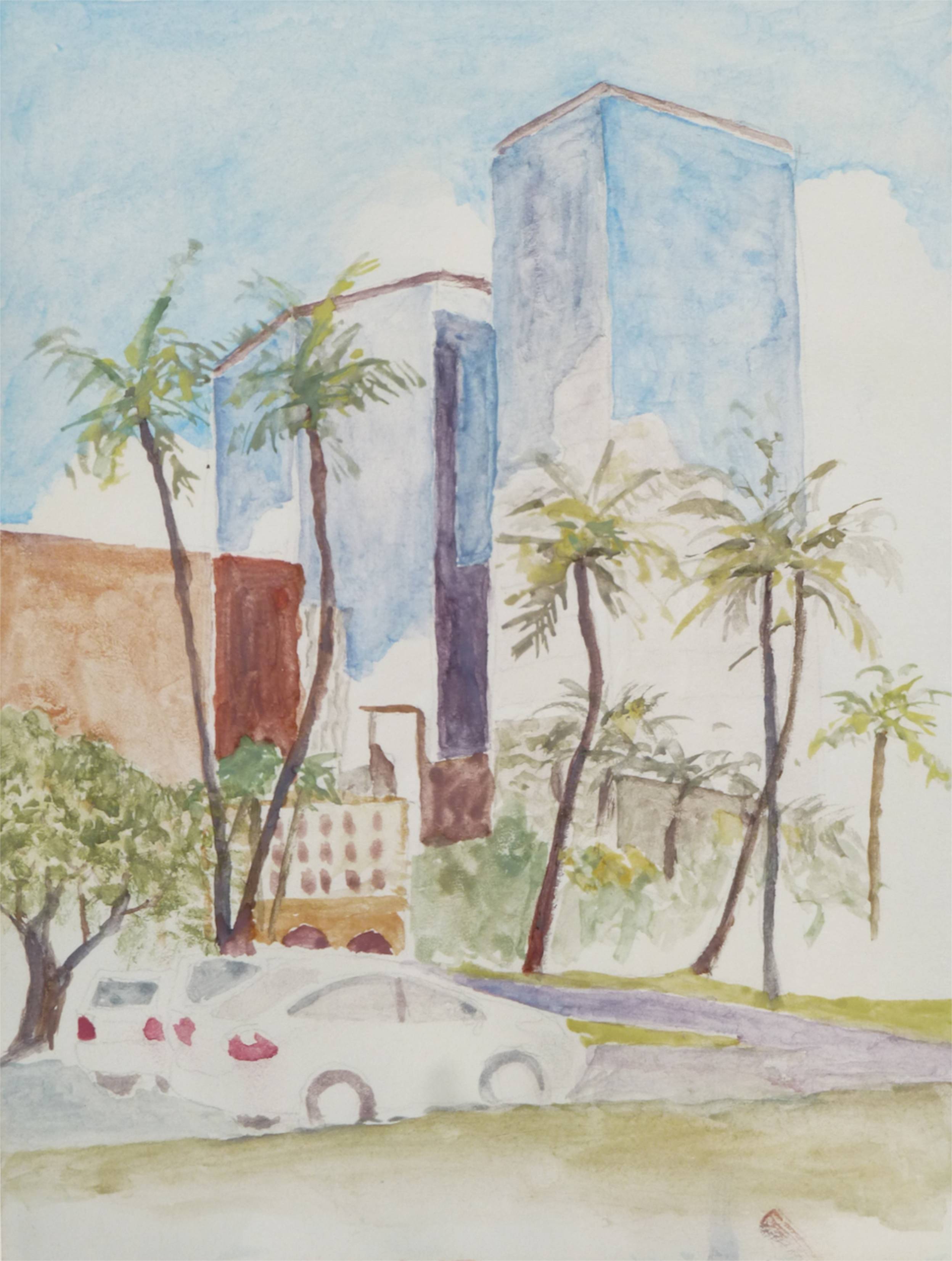
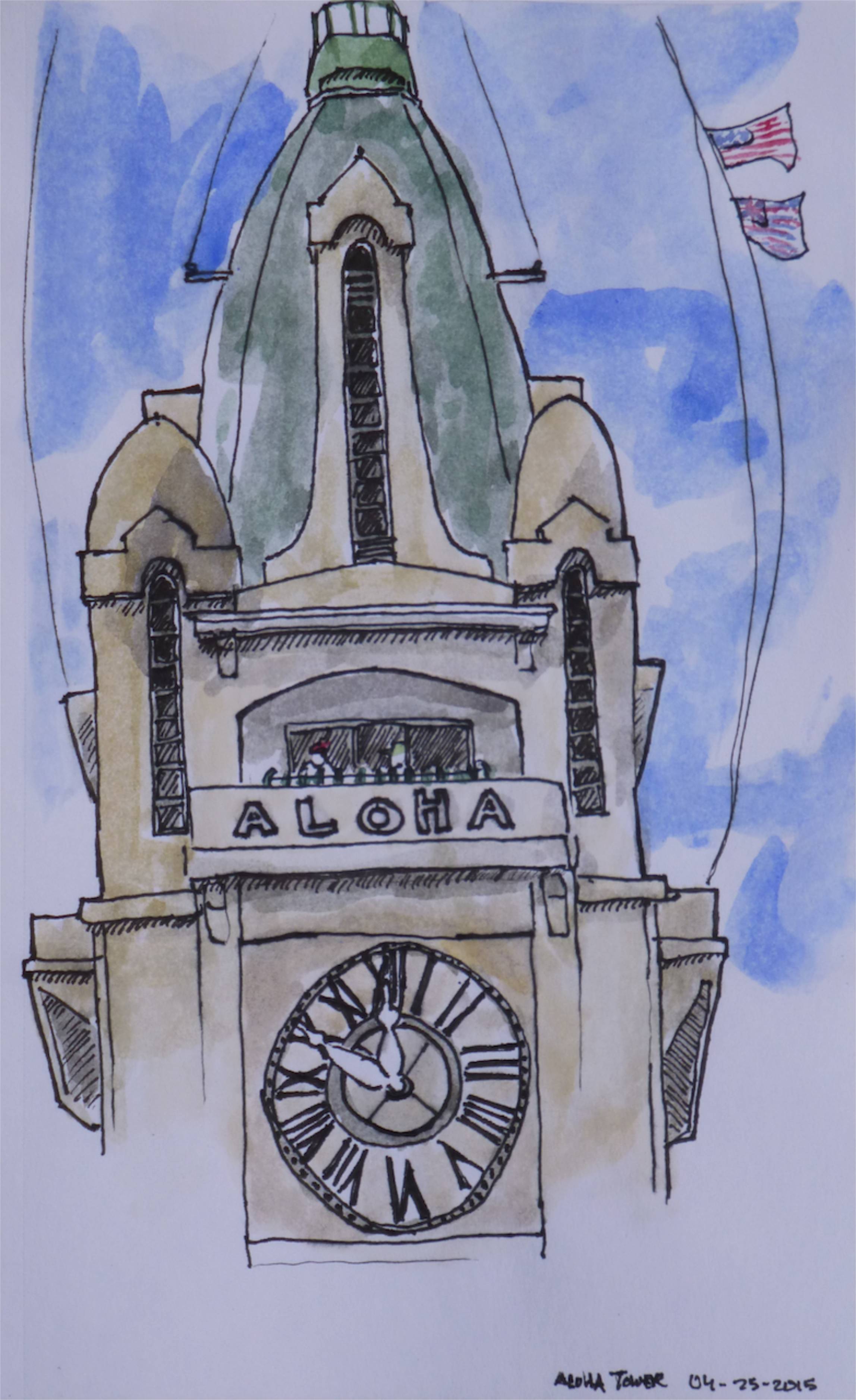

May 24, 2015 Sketch Event
Posted: April 27, 2015 Filed under: USkO | Tags: ala moana, event announcement Leave a commentJoin us for a morning of urban sketching at Ala Moana Shopping Center where we can gain a close-up view of current construction work as well as a bird’s-eye view of shoppers and cars below!
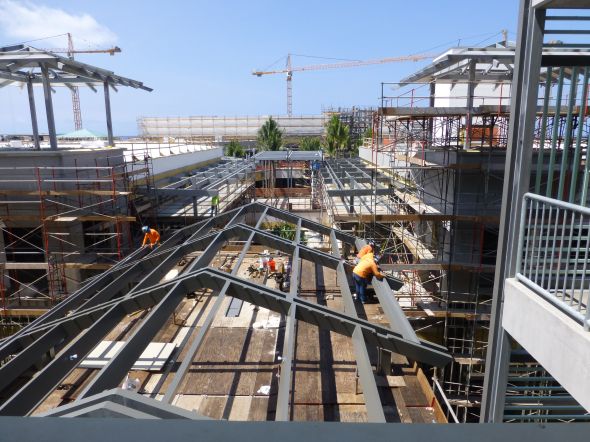
Where: Ala Moana Shopping Center – Parking garage level 8 (free parking throughout)
When: 9:30am – 11:30am
What to expect: An informal and leisurely morning of sketching for artists of all levels and ages; show-and-tell at 11:00am (participation optional)
What to bring: Art supplies of your choice and lots of enthusiasm (also suggested: sun protection, personal food and drink, stool or chair)
For directions see Upcoming Events.
Hope to see you there!
Construction Leftovers
Posted: April 20, 2015 Filed under: USkO | Tags: construction, crayons, pen, pencil, watercolors 4 CommentsAJ: For many months I’ve been walking by a particular construction site daily. What started as a house remodel now seems like a complete rebuild except for part of the carport and a rain gutter! Several roll-off containers have been filled with demolished parts of the house and then carted away to the landfill. Since the project is nearing completion, I wanted to attempt a sketch of the dumpster before it is permanently removed from the site.
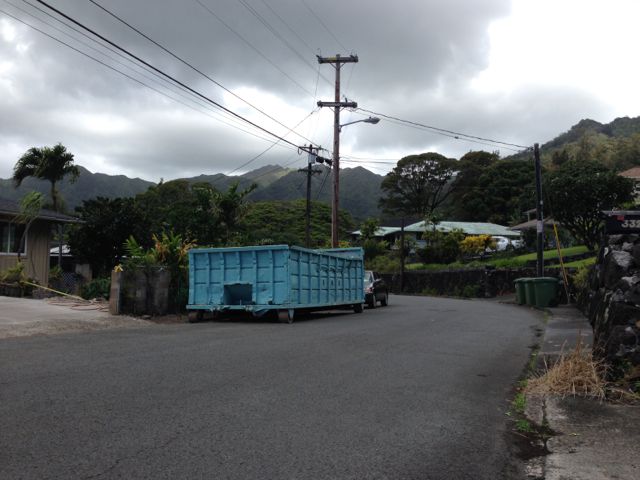
Similar to my last sketch session, I decided to begin with a sloppy “planning sketch” to see what would be most problematic … as well as to give myself an added chance to get the perspective in better shape the second time around. I also wanted to test the color palette available to me as I only had four crayons (yellow, red, green, blue) and my usual black TÜL pen. I almost ended my session with just the blue dumpster pictured … and nothing else … but I remembered my improvement goal from last session. That was to practise including background (and foreground) details to anchor the target item in its setting … and on the page. I plan to keep focusing on that goal in the future.
In all, it was a fun morning and I was pleased that the rain stayed away long enough for me to put something on paper!
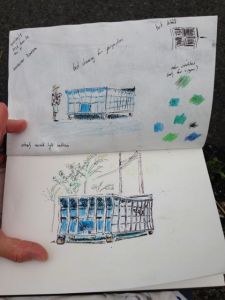
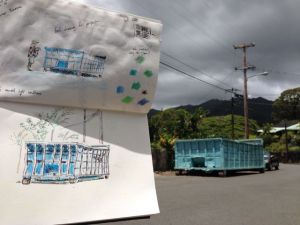
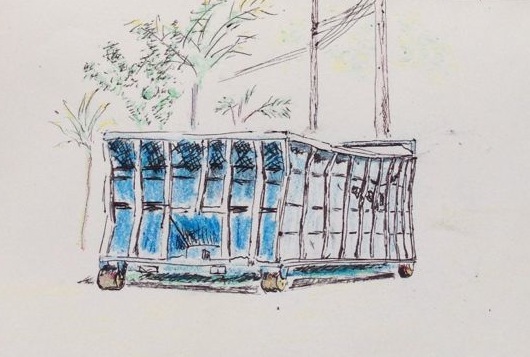
Harald: I confess to being a dumpster diver at heart. Not of trash cans, mind you, but construction-site roll-off containers. Largish pieces of discarded dimensional lumber are always attractive, and occasionally one finds treasures in the form of hardwood flooring, brand-new pipes, and more. But I digress…
The container I chose to sketch today is one I know well. As the construction is wrapping up, the container is seeing only light use, filling up slowly, mostly with cardboard and small chunks of wood.
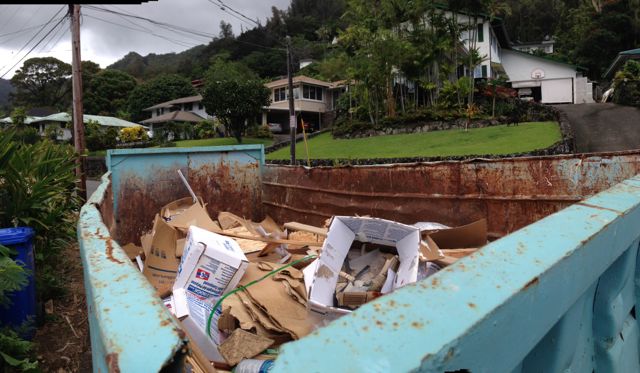
Sketching the interior of this rusty and rather banged-up specimen proved to be too much of a challenge for my still budding watercolor skills. Yet again I succumbed to the temptation of going after the details too soon (or at all), rather than using light colors on large areas first and then building depth and contrast selectively and deliberately. Argh.

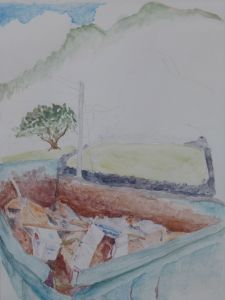
It was fun though (in a mildly masochistic sense) to realize my mistakes as I made them and to attempt to rescue at least some of my sketch. Needless to say, the whole operation took far too long, forcing me to abandon much of the background. Lesson for next time: bring brushes of different size, focus on water management, clean “palette” every now and then.
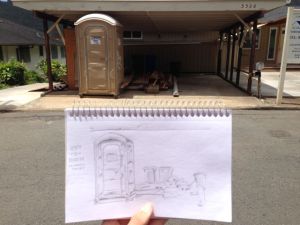
Sebastian: Although work on the house was largely complete, there were still indications of an active construction site. A portable toilet and pile of lumber were among some of the signs. This time, I decided to use one medium (pencil) and move away from my standard pen-watercolor combination.
Once again, we had unique interactions with passersby. Most notably, we were asked a new question: “Are you guys OK?”, which diverged from the usual “What’s going on?” or “Is this a school project?”. It was a nice morning to be out sketching.
Next, I may do a series of portable toilets (as shown) or older cars, since there are a few to be found in the neighborhood.

Upcoming Event: May 24th at Ala Moana Shopping Center
Posted: April 18, 2015 Filed under: USkO | Tags: ala moana, event announcement Leave a commentDetails (e.g., meeting time, parking information, exact location) will be available by April 25th.
Save the date… and hope to see you there!
Neighborhood Sketch
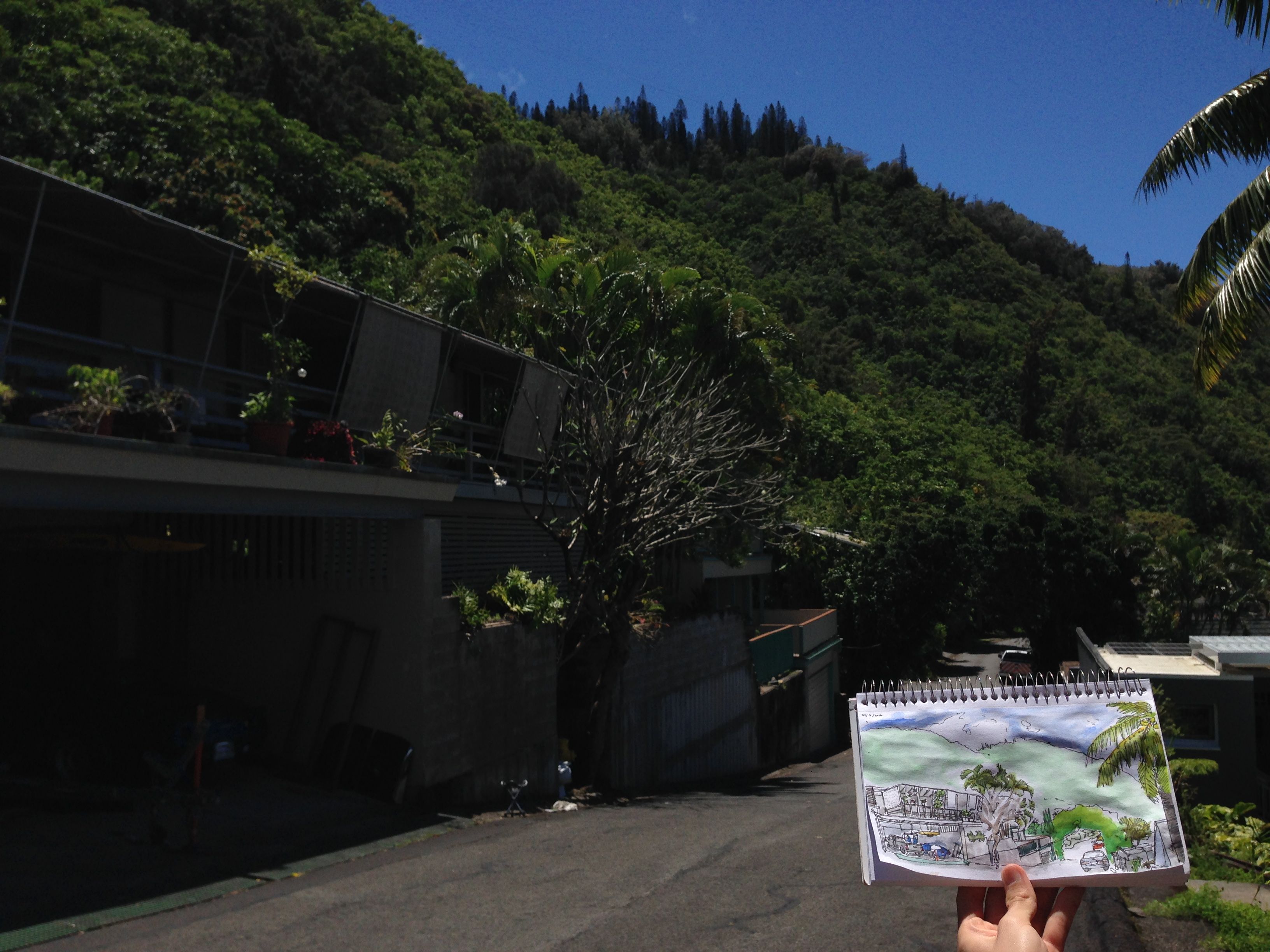
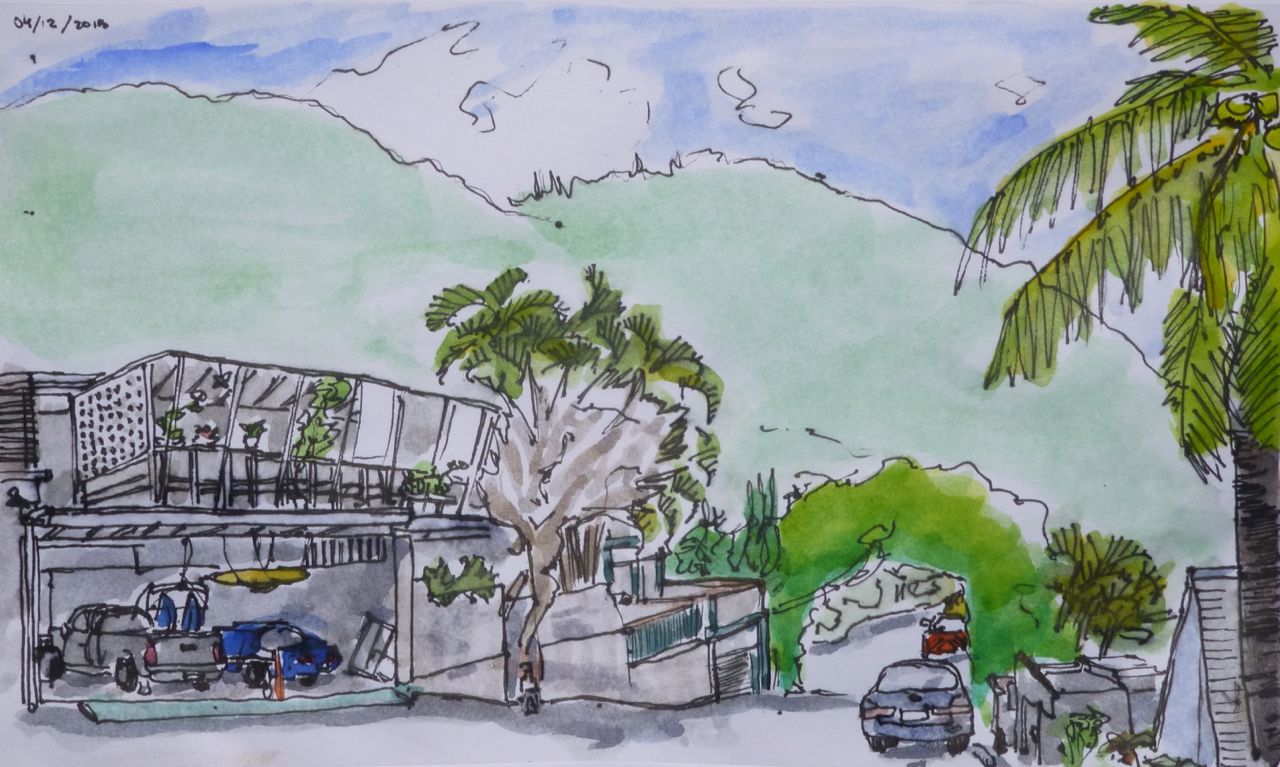
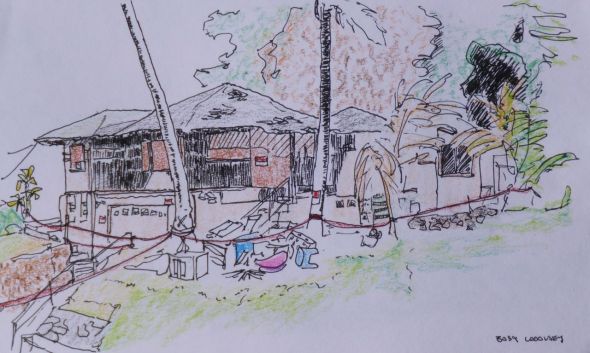
Posted: April 14, 2015 Filed under: USkO | Tags: neighborhood, pen, pencil, watercolor, watercolor pencils 2 CommentsAJ: As mentioned in my last entry, my goals were to ignore my status as a beginner, avoid getting overwhelmed / frustrated by the detail in front of me, and practise without reservation. On this beautiful morning in Honolulu we scouted out an interesting section of a neighborhood. It was a pleasant mix of natural (vegetation) and unnatural (manmade) elements.
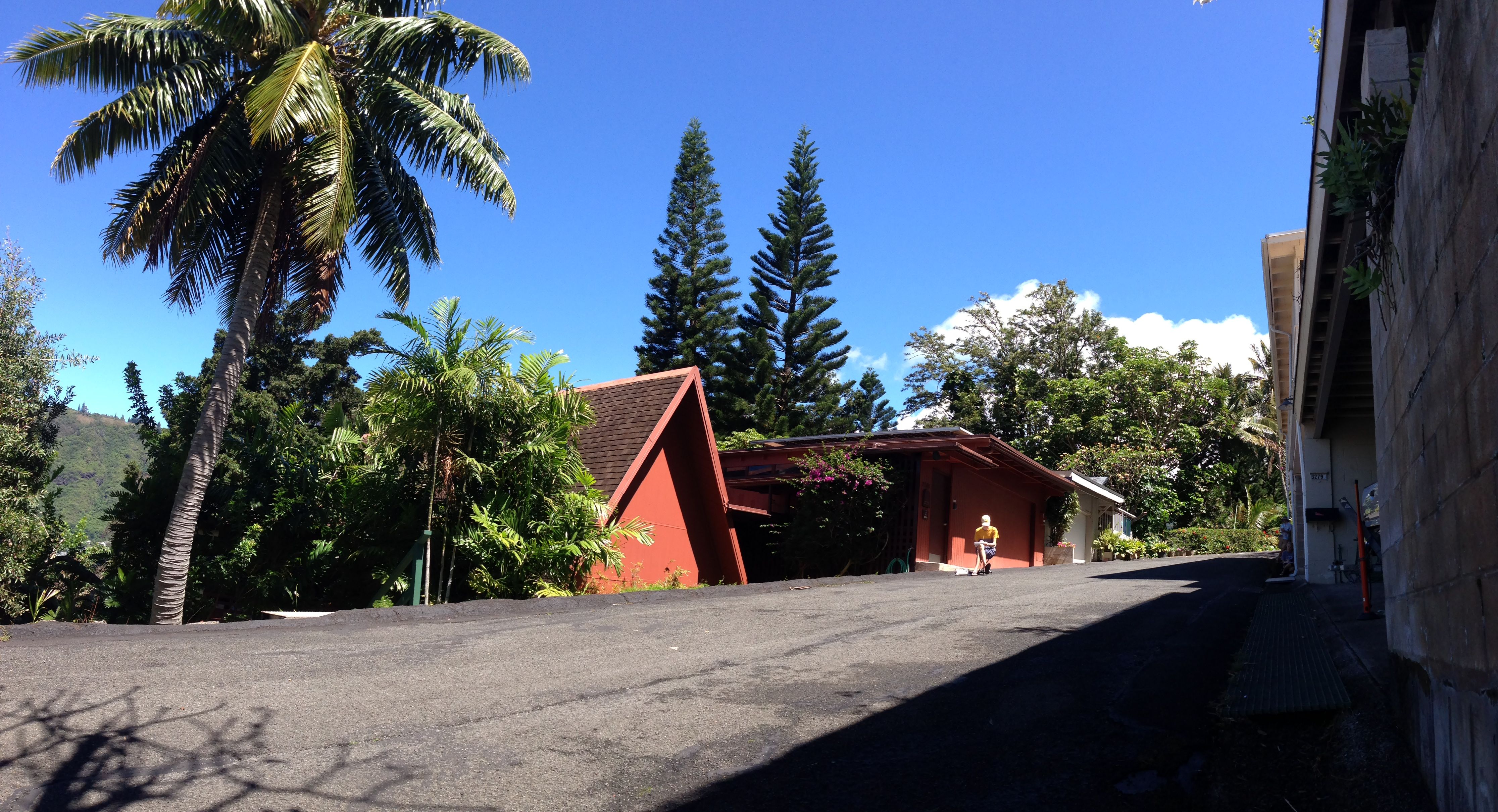
I started a sketch in pen (TÜL GL1 – black, medium on Pentalic 65 lb, 8″ x 5.5″ paper for dry media) and realized that the perspective and scale were wrong; I had a big challenge on my hands. My attitude evolved to one of making lemonade out of lemons though … and I decided to consider my first attempt as a “test sketch” to see how the scene would fit on one landscape-oriented page.

After examining that sketch I moved on to a clean slate. It occurred to me that starting my work by placing a grid on the page in pencil might help me to position the various features more accurately. It felt a bit like I was cheating, but on the other hand this might be a great learning tool. Unfortunately, I took my next photo a little too late in the process, but you can still see a bit of the grid in the background …

As an aside, I was kept in good company during my sketch and made fast friends with a fire hydrant and discarded toilet.

After applying watercolor pencil (Caran d’Ache Fancolor pencils) throughout the work I used a wet brush (Sakura Koi water brush – medium) to blend and spread the colors. At this stage I am least confident about whether I am improving or ruining the picture, but have to admit enjoying the process most at this point.

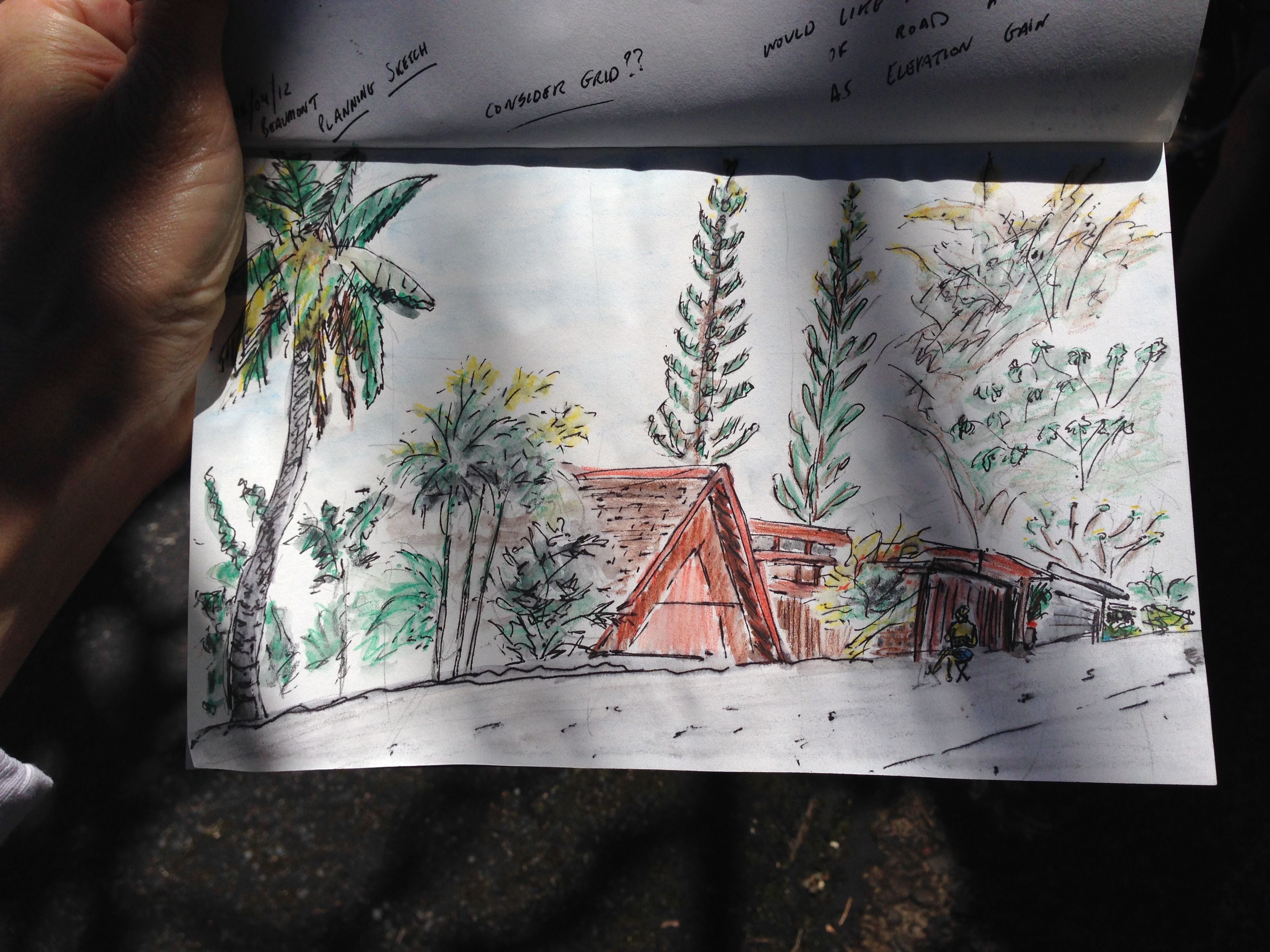
One area that needs particular attention is how I handle the background of my sketches. Typically, I end up with a lot of bland white-space surrounding the foreground / target elements and consequently a “flat” drawing. In the future I would like to pay more attention to how I can show much more depth in the scene captured.
Harald: Taking up position on a different stretch of the same street, my goal was modest, namely to improve upon my previous foray into watercolors.
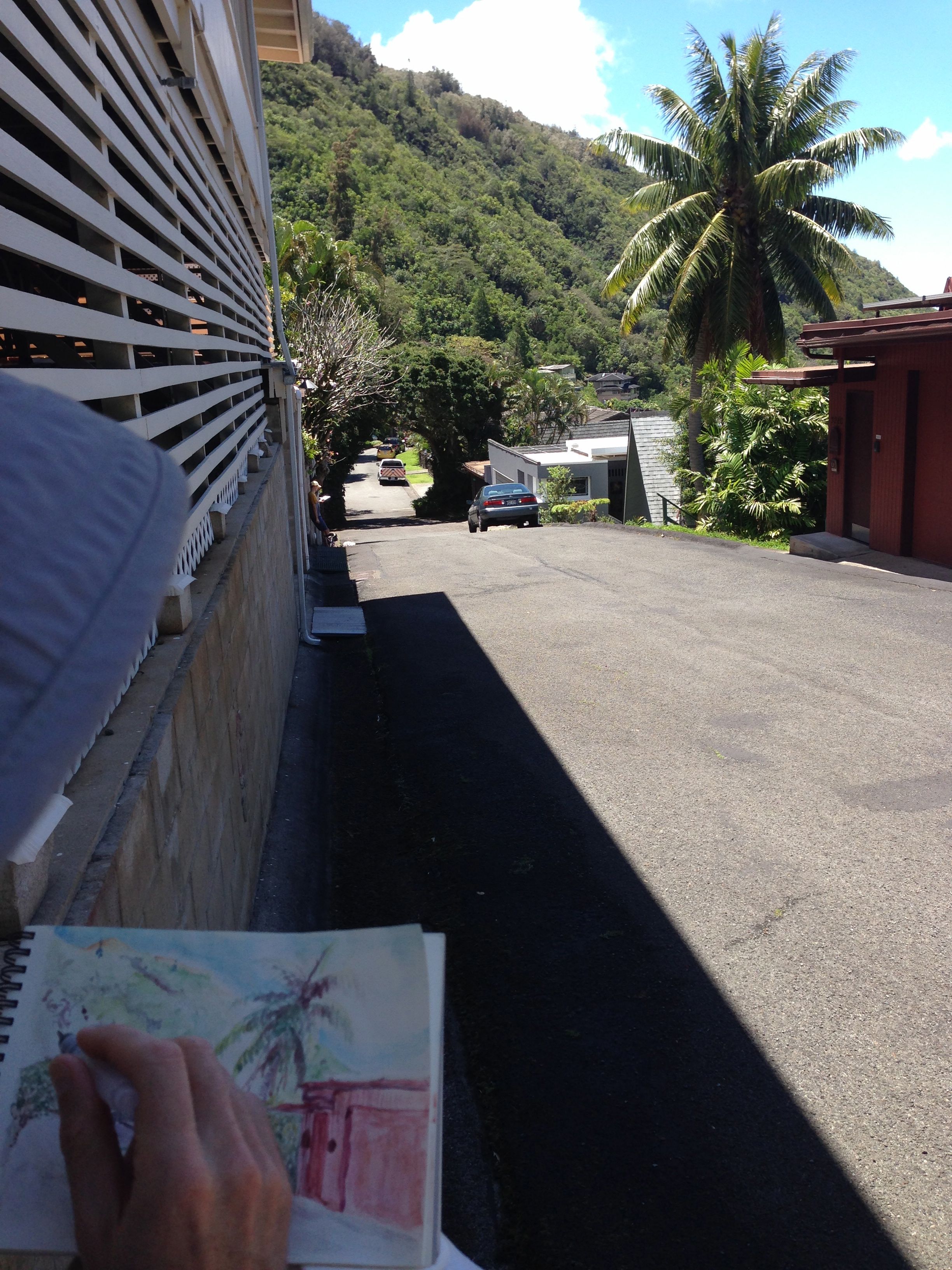
Although figuring this out for myself might neither be the fastest nor the most reliable approach, I believe I learned a lot today. For instance, don’t skip the pencil outline. Start with a layer of light colors. Keep your watercolor set clean or you will end up with everything looking like different shades of brown. Add detail with a fine brush in darker colors. All pretty obvious, but in last week’s attempt I still somehow failed to understand (or adhere to) even the most fundamental rules. Today’s result is far from frame-worthy, but I am quite happy with the progress made.
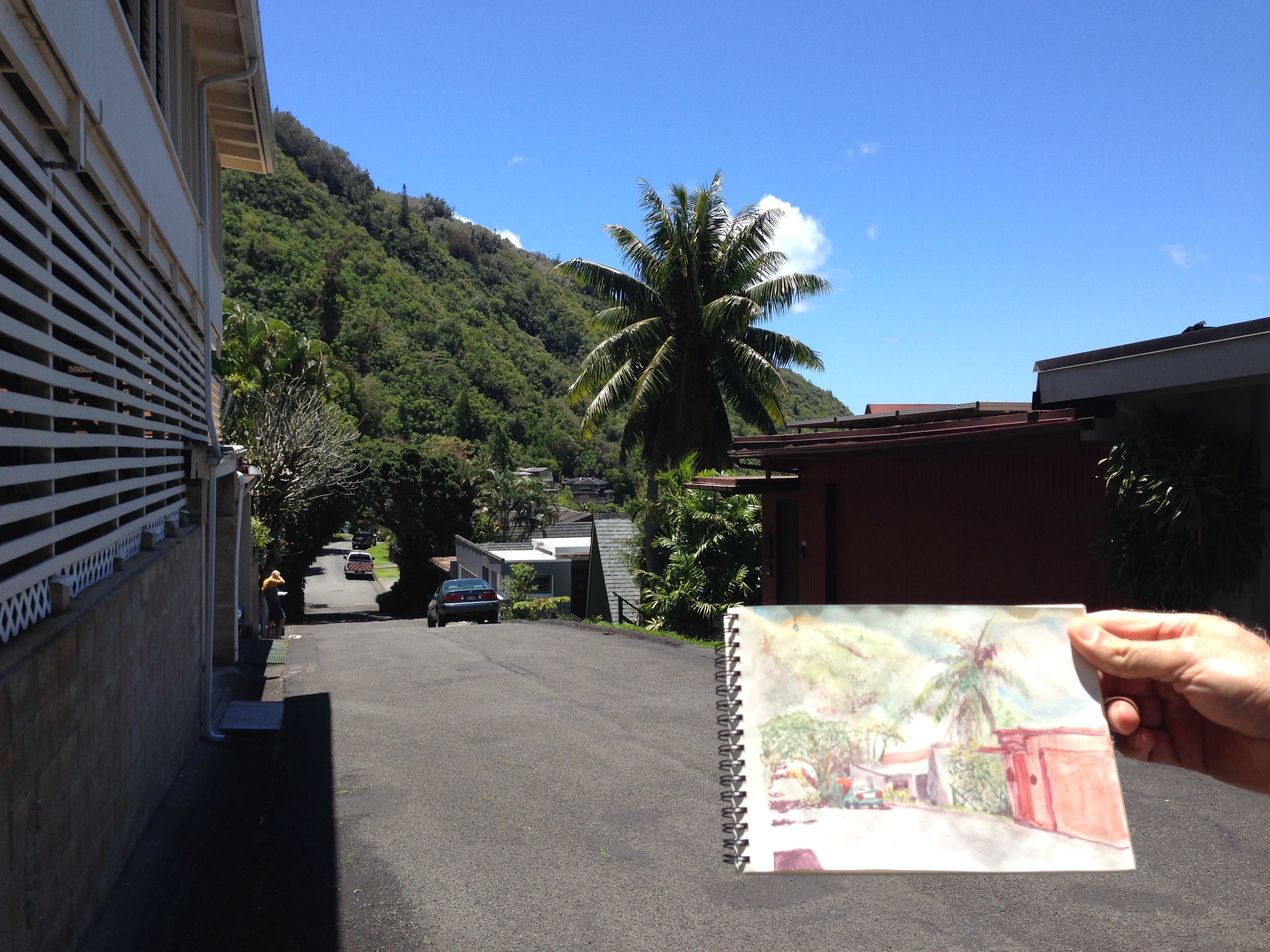
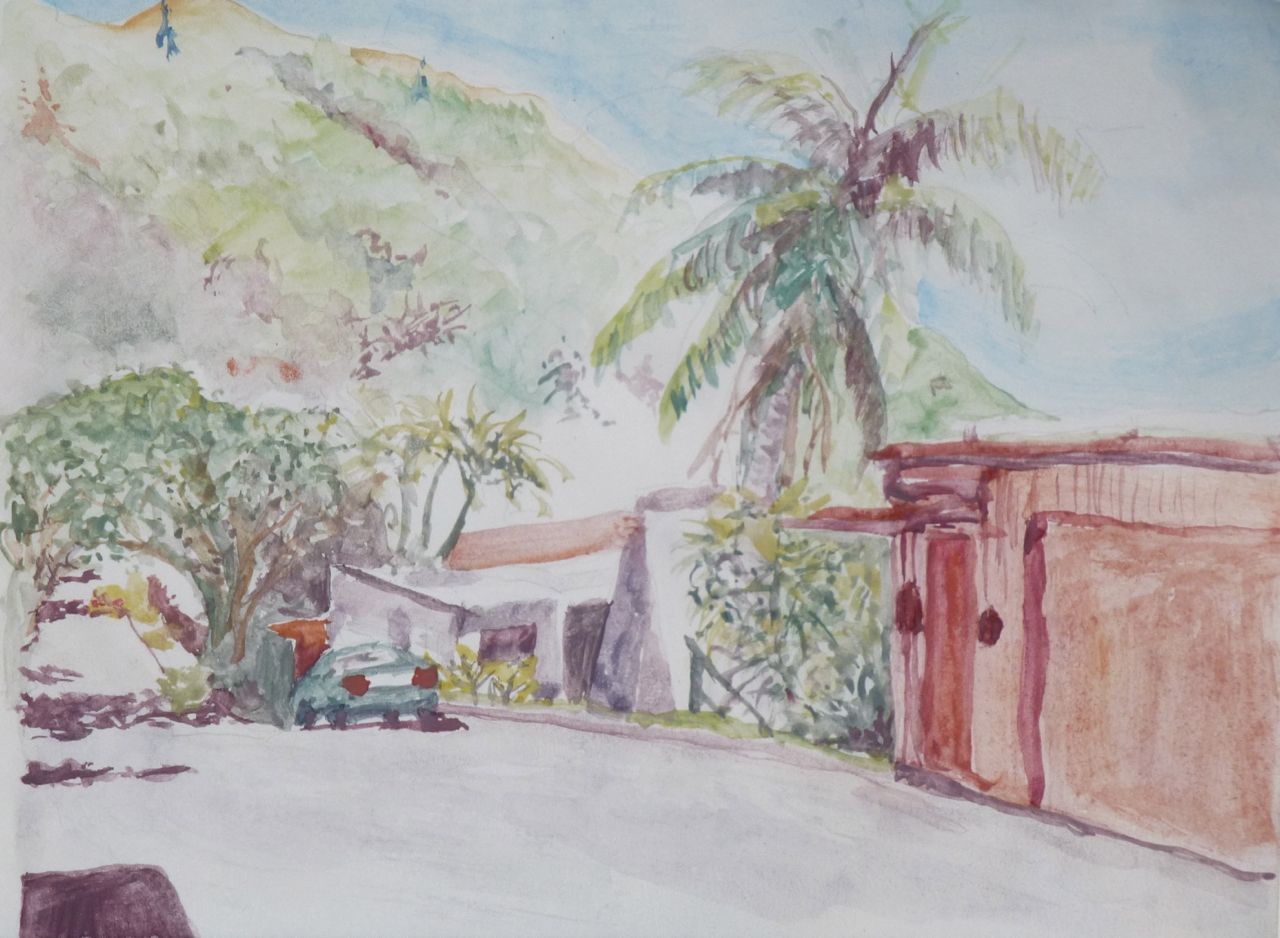
Strategy from here on: practice some more… and then take a class!
Sebastian: It was a nice morning to be outside, and a few people stopped to see what we were up to. We also received a request from a resident of the neighborhood to ask permission beforehand – pointing out that we were sketching on a private road. Our first encounter with a concerned neighbor.
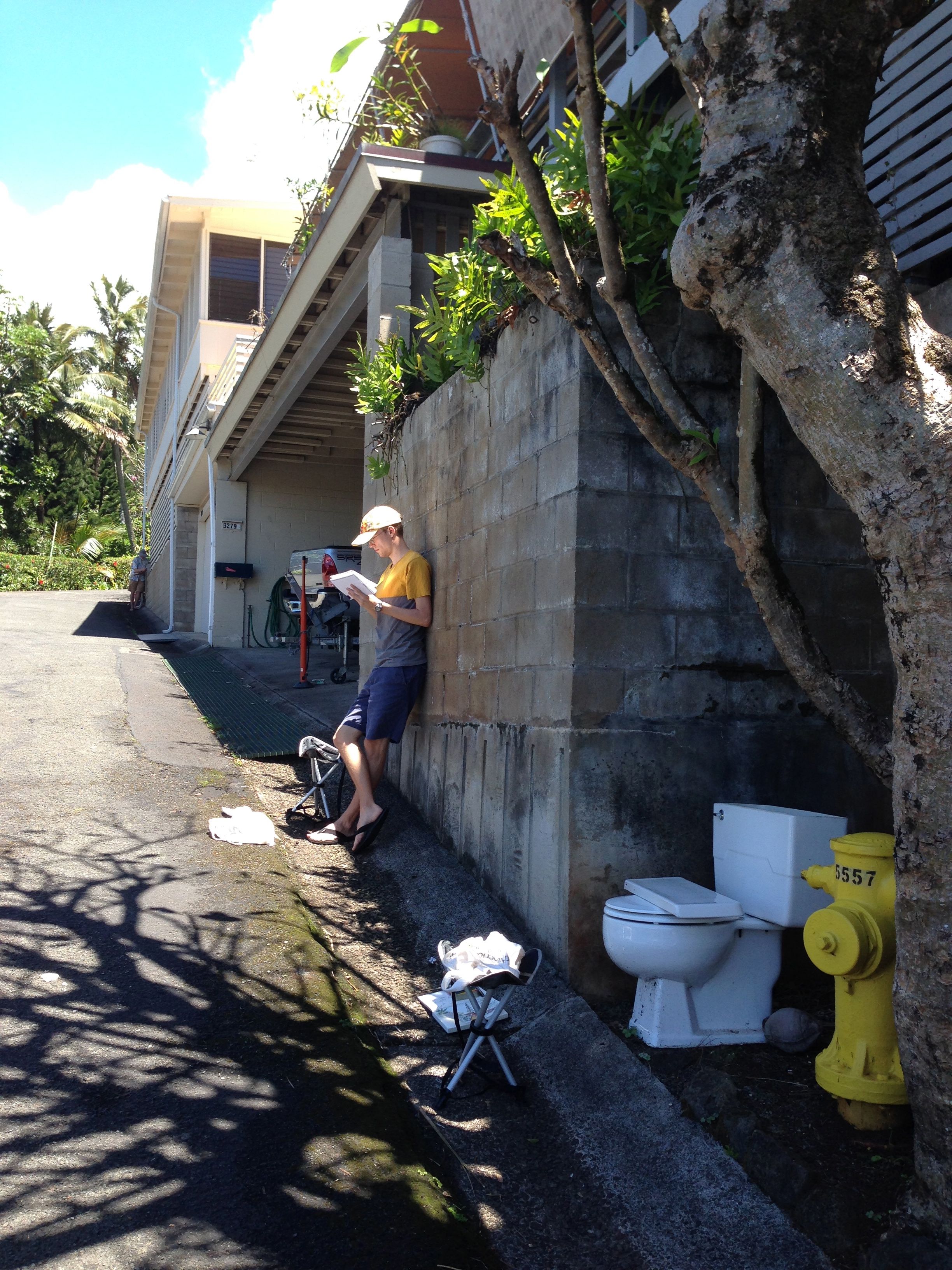
On the sketching side, I felt less satisfied mainly because I ran out of space on my 9x6in. paper. The page was quickly filled with details I wanted to capture and the two media I used. Outlining everything in black pen left little space for color. My pen and watercolor method is something I have perhaps stuck with too closely. Using a different medium or approach may have been more effective, especially when trying to sketch such a large scene. Next time, I want to use one medium (watercolor, pen, or charcoal), focus less on details, and capture more of the atmosphere – something like what Harald did in his sketch above.
Bicycle Repair Shop
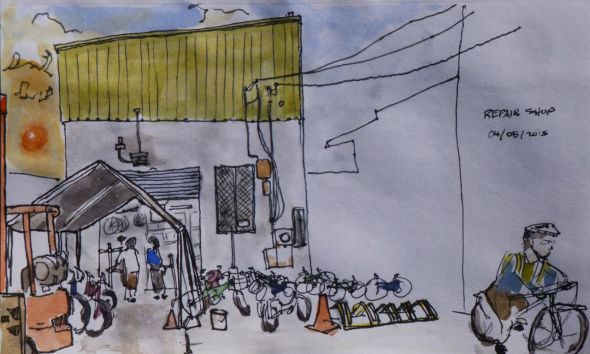
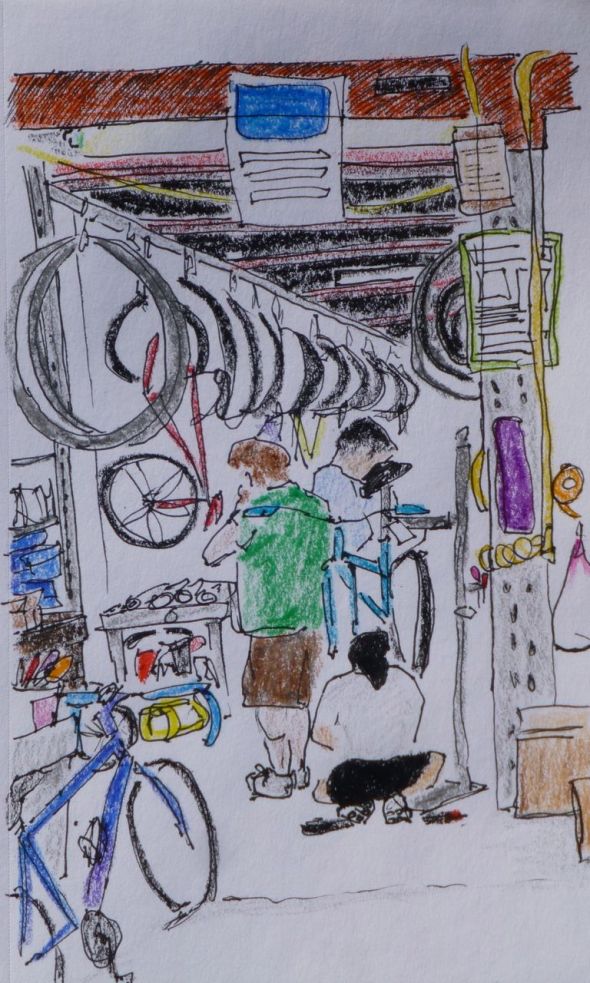
Posted: April 10, 2015 Filed under: USkO | Tags: bicycle, crayon, pen, watercolor Leave a commentA few weeks ago I noticed ominous crunching sounds while cycling and brought my bike to McCully Bicycle to have the bottom bracket replaced. It was interesting to see the axle dismantled, all the specialized tools that were used, and what caused the crunching sounds. I had a good experience and thought I would return to sketch the shop.
As this is a bicycle repair shop, there are many bicycles, tools, boxes, spare parts, and people to sketch. It was challenging to realistically capture the repair shop without going into enormous detail. What do you include in the sketch? It’s definitely a learning process. I look forward to returning to make another attempt.
I used watercolors, crayons, and a black liquid ink pen on dry-media 9x6in. paper.
Sunday Afternoon at Manoa Park
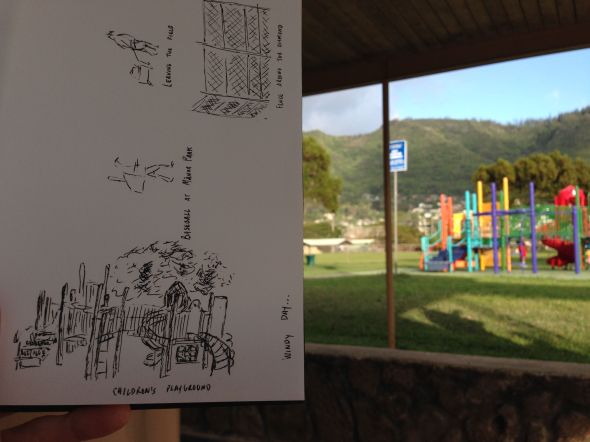
Posted: April 7, 2015 Filed under: USkO | Tags: Manoa Park, pen, watercolor Leave a commentAJ: Today I realized that I haven’t sketched since the first week of January! That’s deadly … especially for a beginner. My hands felt out of control and I got overwhelmed by the detail in front of me. I decided to be practical and focus more on the experience than the art with the hope that future outings would go smoother.
This afternoon, Manoa Park was rather windy and there were even a few episodes of light rain. Two teams were facing off on one of the baseball fields. I wanted to sketch some outfielders with their generous stationary moments … but the teams were finished after we had only observed one inning and I had not even put pen to paper once.
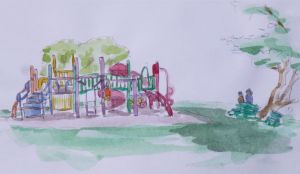
Next, we aimed for a playground structure to capture the action, shapes, and colors there. Again, I mostly observed my surroundings and only placed a few lines (“chicken scratches”) on my paper. It was great to observe my surroundings and I plan on heading out again this coming week to gently get my momentum going.
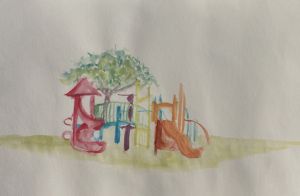
Harald: Never one to be intimidated by insurmountable challenges, I tried out my brand new mini-watercolor set. First lesson: watercolors need practice. I initially wanted to create a very abstract view of the playground, but a combination of too much attention to detail and profound ignorance of the medium resulted in something that is perhaps better described as naive art. I thoroughly enjoyed the exercise though and shall keep trying.

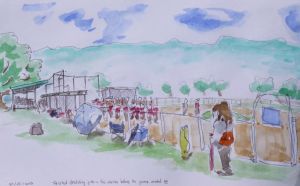
Sebastian: Even though intermittent rain and high wind presented challenges, I managed to at least outline the scene at the baseball game before it wrapped up. With the vibrant colors of the baseball team’s jerseys and the playground nearby, I had the opportunity to use some undiluted, unmixed colors straight from my set.
I used watercolor and pen on dry-media, acid-free, heavyweight 9x6in. paper.
Manoa Marketplace Farmer’s Market
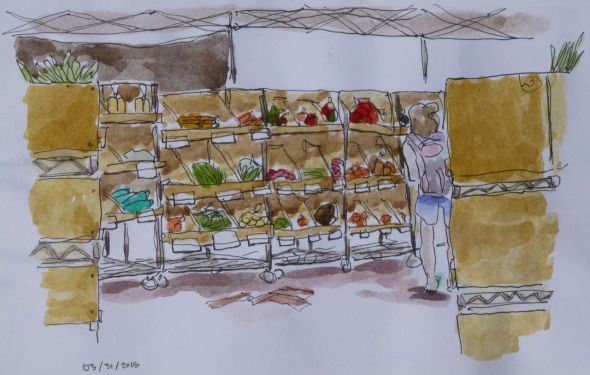
Posted: March 31, 2015 Filed under: USkO | Tags: market, pen, watercolor 2 CommentsWith slightly overcast skies and a pleasant breeze, this morning brought out friendly faces and a small, but vibrant farmer’s market.
Although trying to capture the layout and architecture of the marketplace was a good challenge, I regret not having focused more on the people mingling between the stands. On future excursions I will first take a look at what the most important elements are that I want to show. I will ask myself a few deliberate questions: How much time do I want to spend or have? What is the subject, and what are the key elements that accompany it? What medium or media would best depict this subject? What do I want to challenge myself with?
I used watercolor and pen on dry-media, acid-free, heavyweight 9x6in. paper.


 AJ Tauber
 Harald Ebeling
 Terri Dux
 noah kutaka
 Susan Li
 Sebastian
 uskoadmin
 Urban Sketchers O‘ahu